Economics Fieldwork: From Theory to Reality(Vu Ha Thu/2023)
13th Batch, Assistant Professor (Graduate School of Economics) Vu Ha Thu
1.Why Fieldwork?
A research hypothesis can be formulated from existing literature and research experience. However, data is often needed to test it. Researchers can use primary data and/or secondary data. Fieldwork is necessary to collect primary data. In addition, fieldwork enriches the understanding of the study site, which helps researchers write research papers and research grants lively and precisely.
2.My Fieldwork in Vietnam
I have several experiences in conducting fieldwork in Vietnam, Sri Lanka, India, and Japan. Last April and May, I collected primary data from 743 ethnic minority households in Vietnam for my project under the Hakubi Center. The main objective was to promote crop insurance for ethnic minority farmers in disadvantaged regions.
To prepare for a field trip, I often make to-do lists for 3 stages: before, during, and after a field trip.
Before the field trip, it is crucial to find a local collaborator. S/he is a key person who helps me to get permission and monitor the survey. It is an ideal situation if the collaborator has a similar background to us and s/he is willing to be a co-author. In this case, we can transfer our research design easily and s/he has a strong motivation to collect high-quality data.
You might outsource data collection to an organization/company; however, I recommend you visit the field and monitor the progress directly.
During the field trip, it is essential to conduct a pilot survey first. You need to test your questionnaire and your hypothesis with a small sample. Sometimes my questionnaire and my initial hypothesis are not suitable for the local context. Thanks to the pilot survey, I revised and developed the questionnaire and research hypothesis.
After the field trip, I often take a note to summarize the good and bad points of my field trip.
This helps me to improve future surveys. Additionally, I always keep in touch with my local collaborators and local investigators via SNS (Facebook, Instagram…). For the data cleaning process after the survey, I often contact them to confirm some confusing numbers and information.
3.Fieldwork under and after COVID-19
Because of COVID-19, I could not go to any fieldwork in 2020 and Luckily, my local collaborators support me a lot with data collection. However, I realize some limitations for remote surveys. For example, if emergency situations happen in the field, investigators cannot contact me immediately due to no internet connection. They have to make decisions by themselves, which might affect the quality of data collection. In addition, the survey sometimes must be postponed due to COVID-19 outbreaks at the study site.
After COVID-19, I am happy that I can travel and conduct fieldwork. My fieldwork in 2022 has to follow the guidance and restrictions from the local government at the study site. However, everything has been relieved from 2023.
For me, fieldwork is a valuable experience. I really enjoy talking with local people and trying different cultures and cuisines during my field trip. If you have any questions about fieldwork, I am willing to discuss them with you.
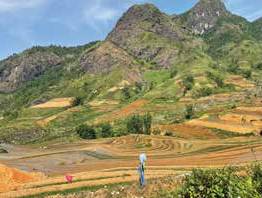
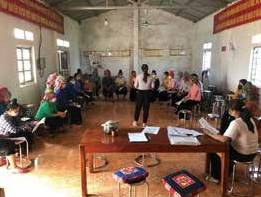
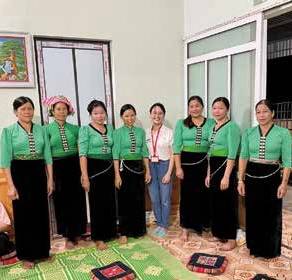
Some pictures of my fieldwork in Vietnam
These photos were taken by me, and they can be used for non-commercial purpose.