Everyday Ethnicity of the Kurds in the Tri-Border Areasof Iran,Turkey, and Iraq (Mostafa Khalili/2023)
13th Batch, Assistant Professor (Center for Southeast Asian Studies) Mostafa Khalili
Spread in the four countries of Iran, Iraq, Turkey, and Syria, the Kurds comprise the biggest ethnic group in the Middle East without a state. Since the formation of the mod-ern map of the Middle East in the aftermath of World War I, they have been engaging in various forms of resistance movements against the suppression of their ethnocultural and political rights in any of the states in which they reside. While their struggle for self-determination has been mainly confined to the state of their origin, there has always been a strong cross-border spillover of the movement in various ways, from transnational solidarities and the flow of refugees to the politicization of cross-border ethnoreligious ties.
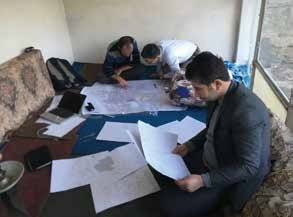
My research trajectory in the last six years has focused on taking a bottom-up approach toward comprehending the perception of Kurdishness among the borderland people residing in the tri-border areas of Iran, Iraq, and Turkey. Inspired by the recent developments in the field of ethnicity and nationalism, my project aims to comprehend non-political actors’ positionality in the contagious cross-border poli-tics of Kurdistan. Methodologically, I primarily rely on participant observation, informal talks, and unstructured inter-views to understand when ethnicity and nation consciousness appear and disappear in the daily interactions of borderland dwellers.
Not surprisingly, access to the field and gaining the trust of interviewees has been the major challenge for my field-work since most of the Kurdish residing areas are highly securitized. Though I am from Iran, I am not of Kurdish origin and only had little contact with them prior to the start of my research. As soon as I initiated the fieldwork during the first year of my doctoral course, I realized that I needed to establish a solid local network in all of those overtly politicized and securitized regions, where the locals are usually reluctant to mingle with a stranger. Thanks to some academic trust networks, I managed to initiate my primary contacts and gradually found my way to spend almost one year in the field during my doctoral course. I had planned to conduct another round of extended fieldwork during my postdoctoral fellowship starting in February 2020, but I could not travel to the region due to the COVID-19 travel restrictions. It was indeed the most challenging time for my research as a fieldworker, and I became so upset that I could no longer improve my work. However, I managed to stay connected with my local informants via various social media apps and used my research grant to hire some assistants to collect the data I needed. Of course, it was not an ideal situation, but it eventually worked well for me.
Another critical issue that I have been dealing with since the beginning of my research is the ever-changing security situation in the field and the possibility of traveling or staying in the region. When I reside in the field, I have to observe regional and local political situations closely, and as soon as the armed tensions between the states and Kurdish militia groups get tense, I rapidly change my location or halt the fieldwork. Moreover, prior to my trips to the field, I have to apply for special permission from the Hakubi Center and my host institute at Kyoto University, as my entire focus region is classified under a high-level travel risk area by Japan’s Ministry of Foreign Affairs. At the moment, due to the intensification of the Israel/Palestine conflict and the prospect of its regional spillover, there is a high possibility that my next year’s fieldwork plan will be affected. Accordingly, I might again think of relying on my experience during the COVID-19 time to activate my local network in case I am not able to travel in person.